
Other
Emulators
Emulator Support
Fuego provides built-in support for Firebase Emulators, making it easy to develop and test your projects locally.
Automatic Detection
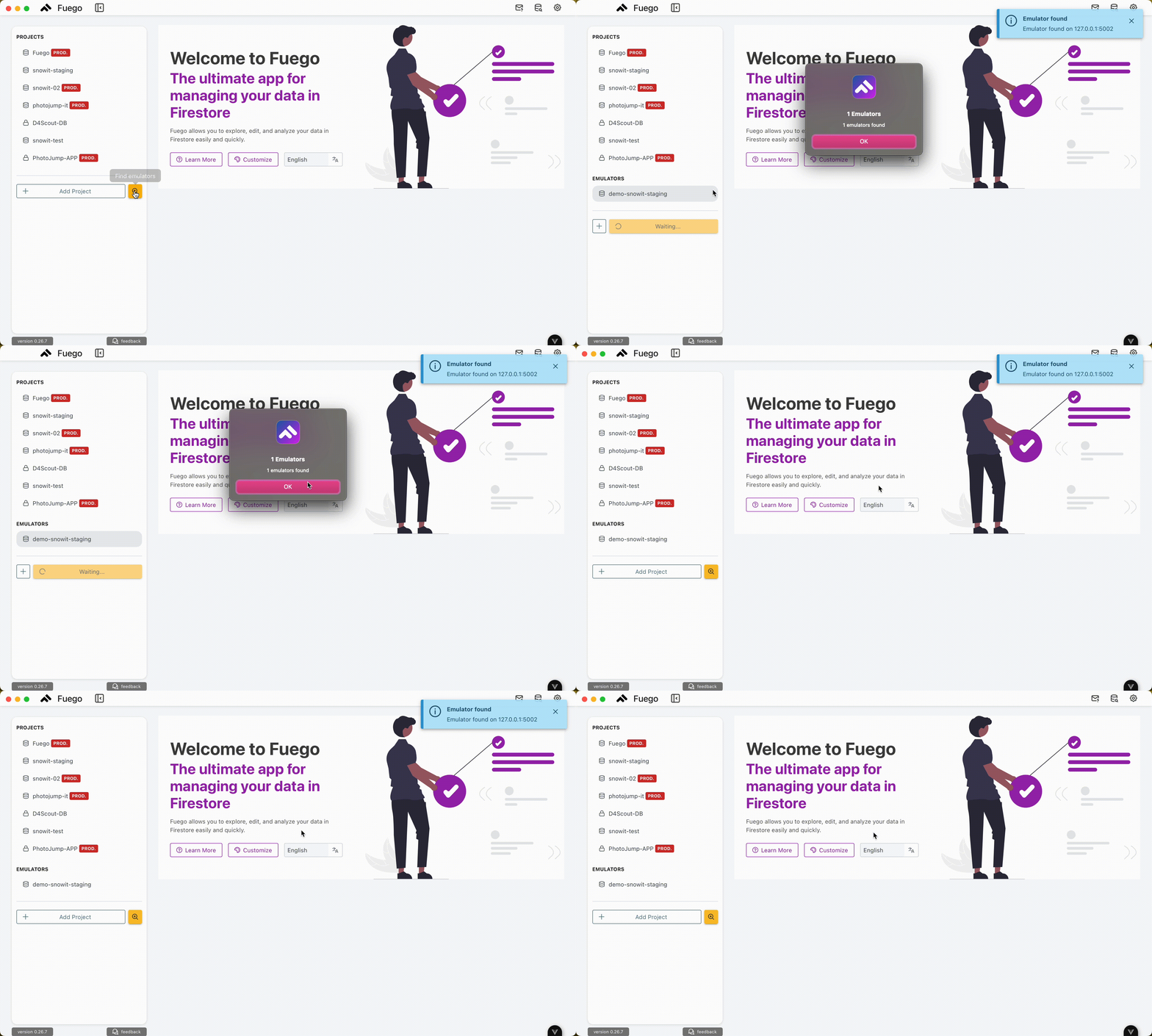
- If your emulators are running on the default ports, Fuego will automatically detect them when the app starts.
- If detection takes too long, you can manually trigger it:
- macOS: CMD + D
- Windows/Linux: CTRL + D
- Or click the Search Emulators button in the left sidebar.
Manual Connection
If your emulator is not running on the default ports, you can still connect it manually:
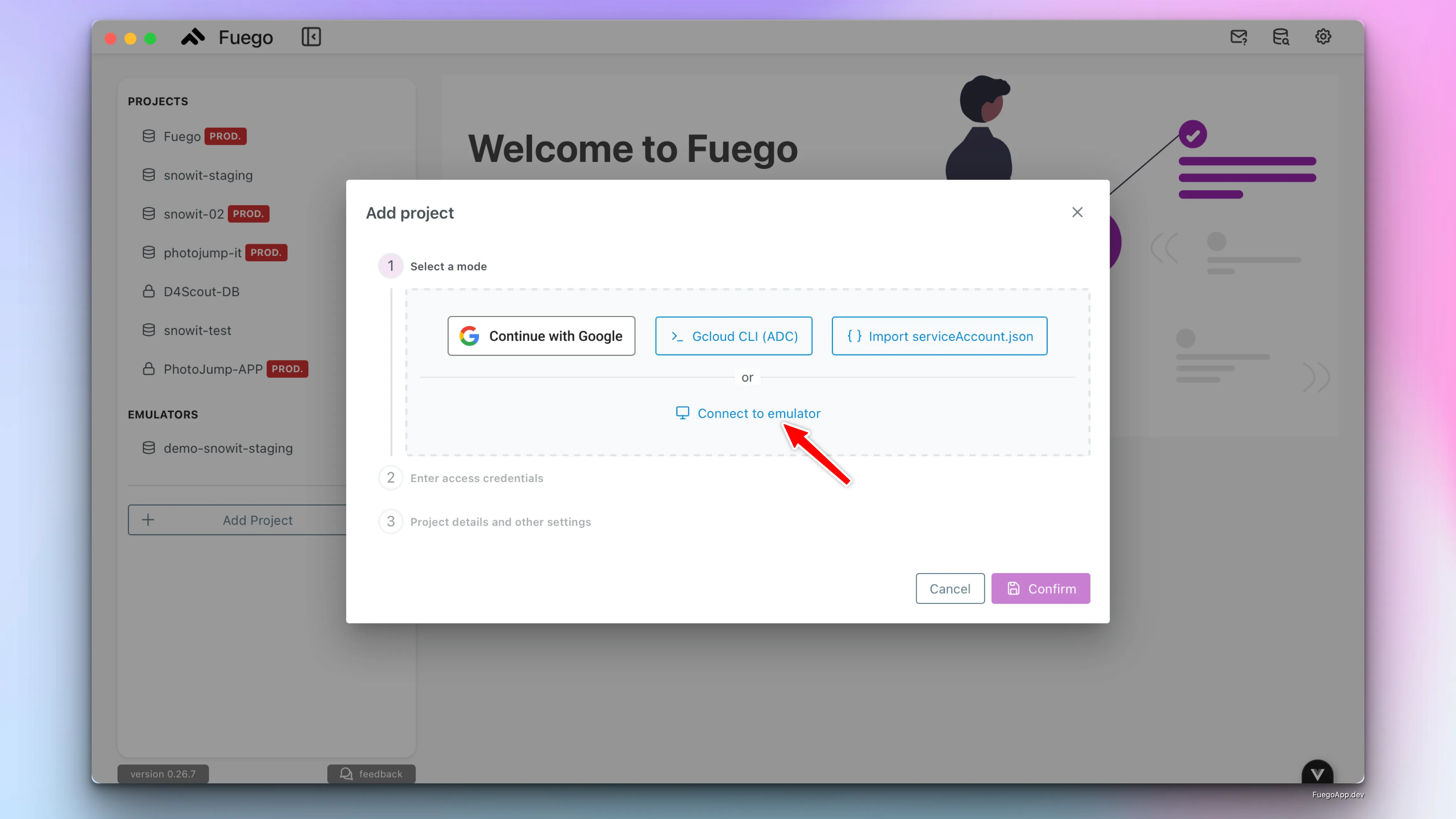
- Go to Add Project.
- Select Connect to Emulator.
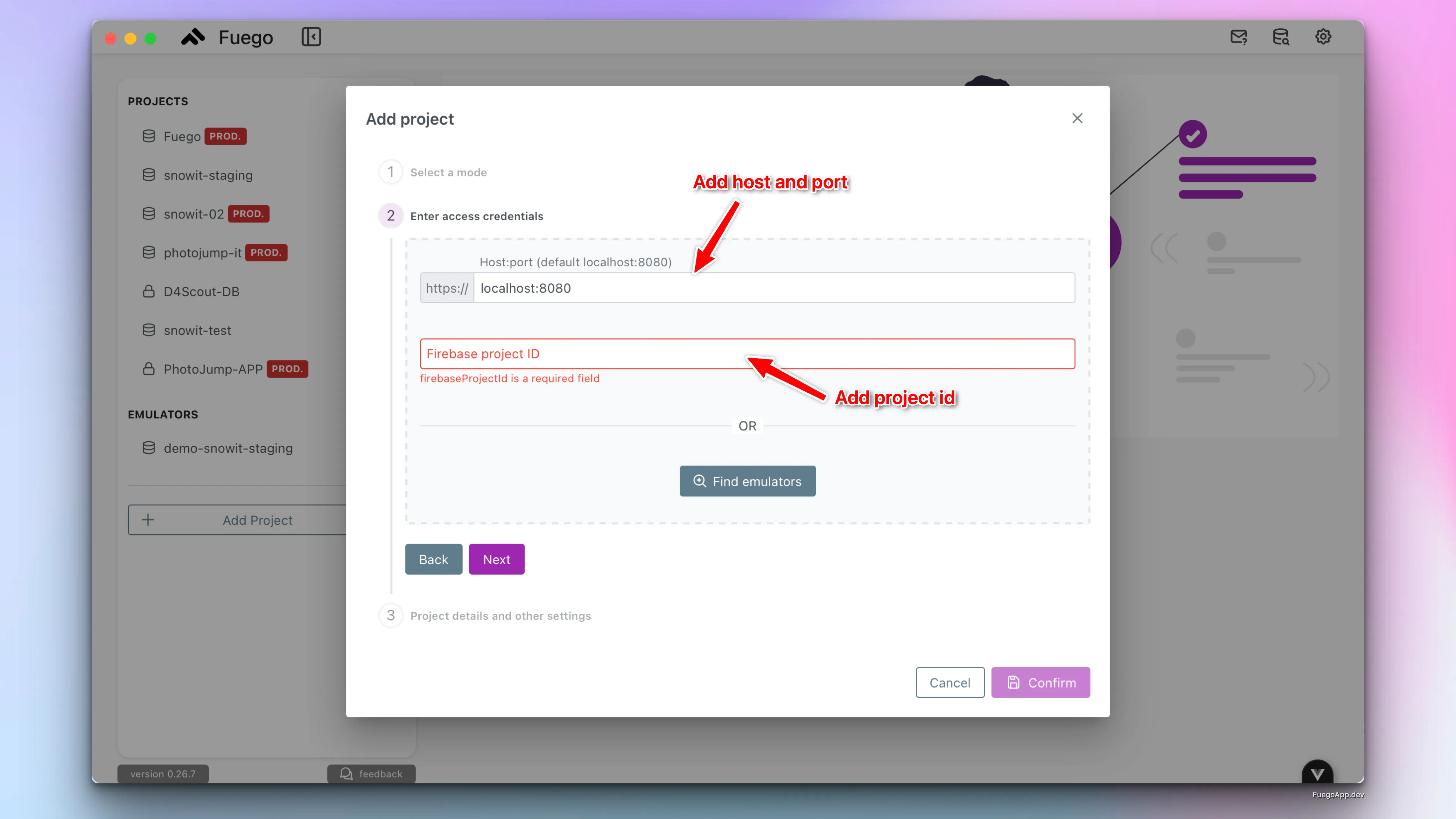
- Enter the custom host and port settings.
Emulator on Another Computer or in Docker
The host does not have to be this computer: enter the address of the machine
running the emulators, such as 192.168.1.20:8080 or
host.docker.internal:8080 (an IPv6 address goes in brackets: [fd00::20]:8080).
- The emulators listen only on
localhostby default. To reach them from another computer, set"host": "0.0.0.0"forfirestore,auth,storage,database,uiandhubin theemulatorssection offirebase.json, and allow incoming connections if the firewall asks. - Enter the Firestore port (8080 by default). Fuego reads the project ID from
the Emulator UI on the same host when it can; otherwise type it in. A suite
that runs no Firestore emulator is added by its Realtime Database emulator’s
host and port instead:
localhost:9000by default, as the dialog’s hint says. - Fuego connects over plain HTTP, like the emulators themselves. If you publish the emulator behind an HTTPS proxy, Fuego notices and connects to Firestore and the Realtime Database over HTTPS; the Authentication and Storage emulators are still reached over plain HTTP.
Using the Emulator
Once connected, you can use Fuego just like with a standard Firebase project. However, there is one key difference:
- By default, the Firestore emulator provides a single database named (default).
- To work with additional databases, you must explicitly add them:
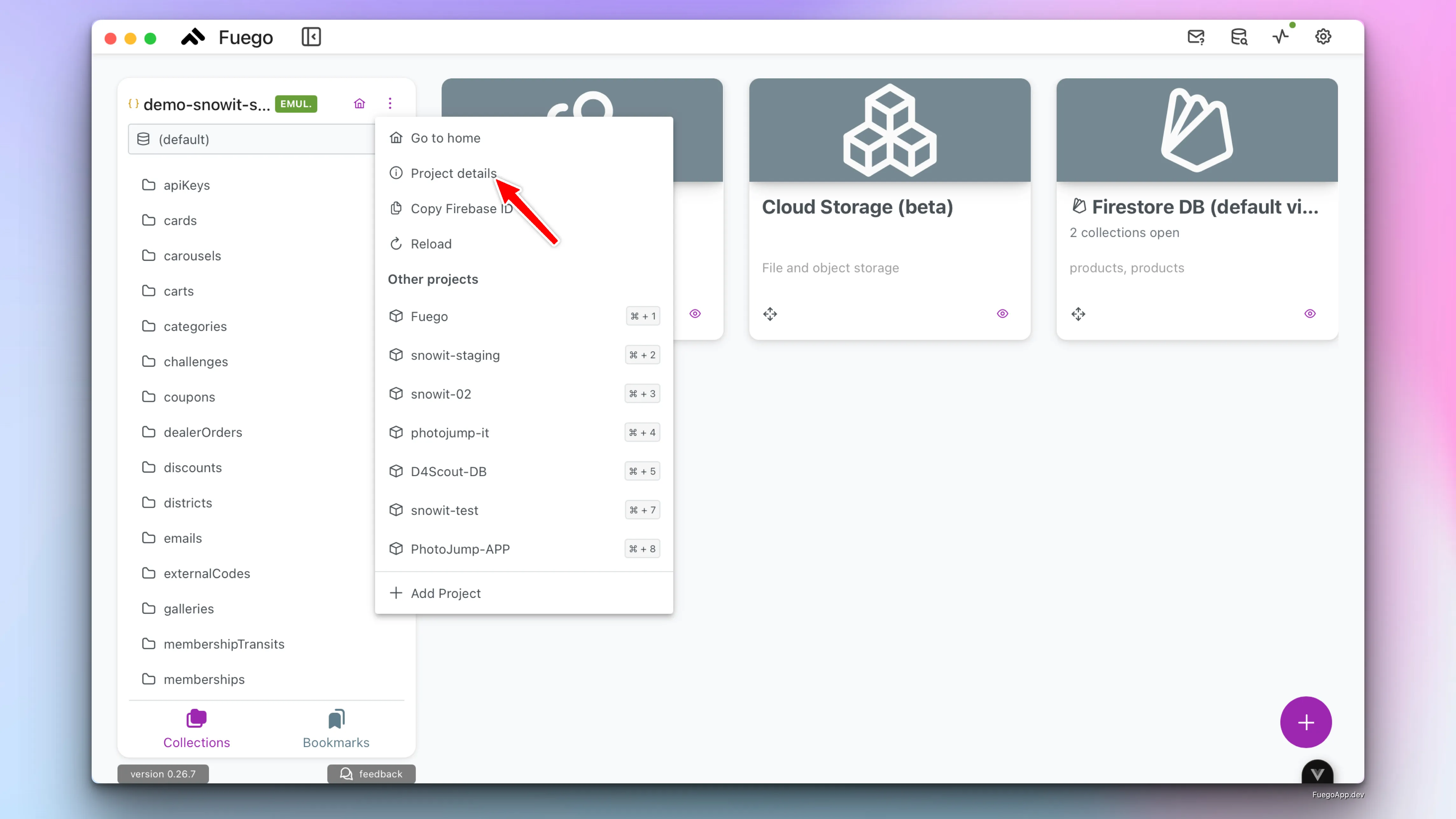
- Open Project Details.
- Click Add Database.
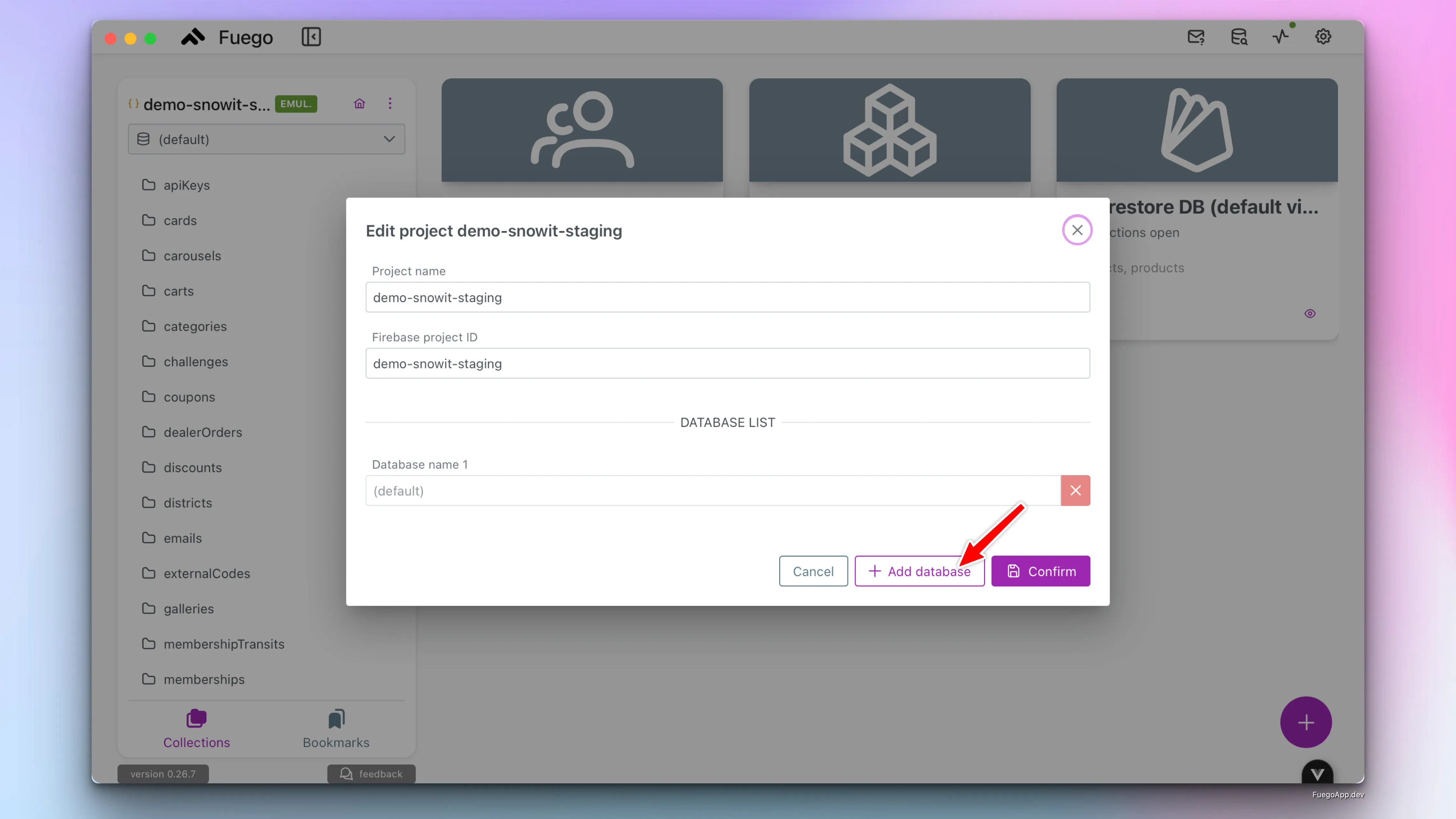
- Confirm to create and connect the new database.
- Open Project Details.
Realtime Database Emulator
Since Fuego 2.3.0, you can use the Realtime Database emulator too. Fuego finds it with the other emulators when the Emulator UI or the hub reports it, even in a suite that runs no Firestore emulator. If neither reports it, add it by hand. Open its databases from the project’s Realtime Database entry in the sidebar. See Emulators in the Realtime Database docs.